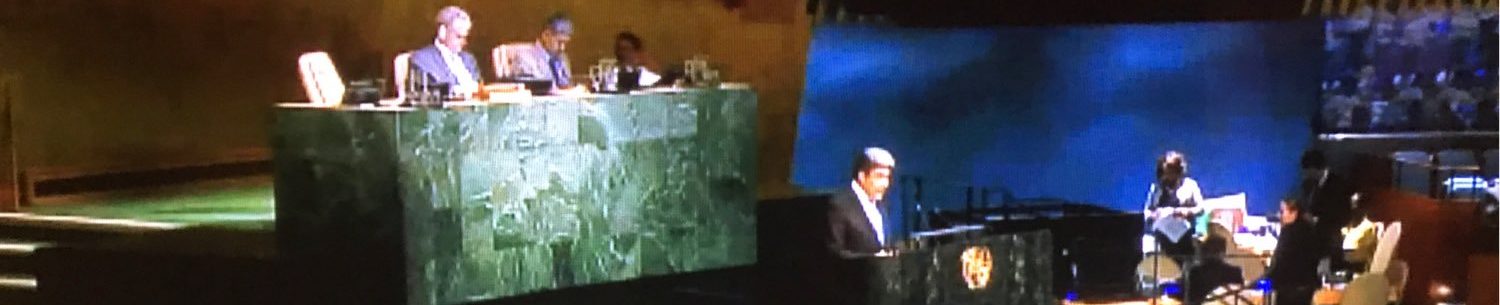
American democracy
American Democracy: From Global Model to Gradual Decline into Democrazy
By
MYR Agung Sidayu
Indonesian Education Foundation – Special Consultative Status with ECOSOC, United Nations since 2013
Important Note
This article analyzes the decline of American democracy as a political system that was once a global model. Using a qualitative approach and literature review, the author shows that over time, U.S. democracy has gradually transformed into “democrazy”—a democracy tainted by extreme polarization, the erosion of institutional norms, and erratic leadership.
Special focus is given to President Donald Trump’s leadership following the conflict with Iran, which highlighted policy inconsistencies and an inability to effectively control the national narrative. In conclusion, American democracy is no longer worthy of emulation by developing countries such as Indonesia.
Introduction
In contemporary political science, American democracy was once positioned as the role model for democratic governance. The 1787 Constitution, its system of checks and balances, and a tradition of relatively peaceful elections inspired many countries after World War II. However, entering the second decade of the 21st century—particularly under current political dynamics—this system has experienced clear democratic backsliding. Partisan polarization, declining public trust, and the rise of extreme rhetoric mark a shift toward democrazy.
Recently, William Upham, a Florida congressional candidate and former Marine, openly called for the assassination of President Donald Trump, labeling him the “Antichrist” and a “false messiah who must be killed.” This statement is not an isolated case but a symptom of the political madness increasingly gripping America.
The Decline in Democratic Quality and Its Harm to the American People
The decline in the quality of American democracy is not merely an elite phenomenon; it has directly harmed millions of ordinary citizens. Gallup and AP-NORC surveys consistently show that public satisfaction with democracy is at its lowest in decades. More than half of Americans view their country as a “poorly functioning democracy.” The consequences are very real: policy gridlock, widening economic inequality, unequal access to healthcare and education, and social instability that fuels violence.
Extreme polarization has turned the public sphere into an endless culture war. Americans are divided into hostile camps, causing urgent issues such as infrastructure, climate change, and social welfare to be sacrificed for partisan interests. As a result, quality of life has declined, trust between citizens has collapsed, and psychological security has become increasingly fragile.
Constitutional Failures and Endless Grievances
One of the most alarming aspects is the inability of the American constitutional system to resolve the crises it has created. Although the U.S. Constitution was designed with elaborate checks and balances, these mechanisms now often exacerbate problems. Practices such as gerrymandering, the politicization of the Supreme Court, voting restrictions, and the Senate filibuster have made meaningful reform extremely difficult.
When people feel their voices are not heard, endless grievances emerge. These grievances are not channeled constitutionally through fair elections or inter-institutional dialogue; instead, they erupt as violent rhetoric, conspiracy theories, and even extreme actions like those of Upham. The cycle repeats: elections end, yet dissatisfaction remains; courts rule, yet their legitimacy is questioned; Congress debates, yet produces no substantive solutions.
President Donald Trump’s leadership in recent years underscores this paradox. Inconsistencies in foreign policy—particularly in handling the conflict with Iran, swinging from harsh military threats to perceived compromises—demonstrate a confusion that has not only weakened America’s international position but also deepened domestic divisions. Unfulfilled grand promises have amplified public frustration, providing fresh fuel for never-ending grievances.
Trump’s Erratic Leadership After Iran: Clear Evidence of American Democracy’s Decline
One of the clearest pieces of evidence of the decline in U.S. democracy is seen in President Donald Trump’s leadership during the 2025–2026 conflict with Iran. Although Trump initially launched a series of joint U.S.-Israeli military strikes against Iranian facilities in early 2026, the final outcome revealed an inability to achieve the “decisive victory” he had frequently promised. This policy not only demonstrated strategic inconsistency on the international stage but also worsened the deepening domestic crisis of confidence.
The following points outline the evidence of erratic leadership:
1. Contradictory Messaging and Policy Inconsistency
Trump repeatedly sent conflicting signals. In the early stages of the conflict (February–March 2026), he threatened Iran with “bombings the likes of which they have never seen” and deployed massive military assets, including aircraft carriers and B-2 stealth bombers. Yet within months, he shifted to diplomacy and signed the Islamabad Memorandum of Understanding on June 17–18, 2026, alongside Iranian President Masoud Pezeshkian.
The agreement was widely criticized by international analysts as “tilting toward Tehran.” It included partial sanctions relief, the reopening of the Strait of Hormuz, and technical commitments to discuss Iran’s nuclear program in the future without the complete destruction of its underground facilities. According to reports from The New York Times and Al Jazeera, this rapid shift in Trump’s position reflected an inconsistent “maximum pressure” approach, which diminished America’s credibility in the eyes of both allies and adversaries.
2. Failure to Achieve Announced Strategic Goals
Despite large-scale U.S. and Israeli attacks on the Natanz and Fordow nuclear facilities and Iranian missile sites, Iran’s nuclear program was not completely destroyed. Leaked intelligence reports indicated that Iran managed to preserve some uranium enrichment capabilities and hidden infrastructure.
Trump then claimed the agreement was a “great victory” and “fair peace,” even though many analysts cited by the BBC and NPR described it as a pragmatic compromise that allowed Iran to retain regional influence.
Field data from the Strait of Hormuz showed that although the waterway was temporarily closed due to Iranian attacks, it quickly reopened after the agreement—at a high global economic cost, with world oil prices surging up to 40% at the peak of the conflict (Bloomberg data, March 2026). The perception that “America could not decisively defeat Iran” spread widely among both Washington elites and the general public.
3. Domestic Impact: Deepening Polarization
These inconsistent foreign policies worsened internal divisions. Criticism came from the MAGA right, which felt Trump was “too soft on the mullahs’ regime,” while Democrats accused him of provoking conflict without a clear exit strategy, purely for political image.
A Pew Research Center field survey (June 2026) showed that only 41% of Americans approved of Trump’s handling of the Iran crisis, with sharp partisan differences: 78% of Republicans supported it compared to just 12% of Democrats. Trump’s frequently shifting rhetoric—from threats of total war to claims of peace—left the American public increasingly confused and eroded trust in executive leadership.
4. Media Influence and Public Opinion
Partisan media amplified these narratives. Fox News and conservative outlets emphasized “diplomatic victory,” while CNN and MSNBC highlighted “chaos and wasted costs.” An AP-NORC survey (July 2026) recorded a sharp drop in public satisfaction with foreign crisis management to just 34%—the lowest since the 2001 invasion of Afghanistan. Protests in major cities (New York, Los Angeles, Chicago) by anti-war groups and veterans demanded accountability for military spending totaling tens of billions of dollars with unclear results.
This phenomenon strengthens the argument that American democracy has lost its capacity for rational control. Contradictory leadership not only weakens America’s global standing but also accelerates the erosion of democratic norms at home. The American people have become direct victims of endless political grievances, in which every presidential decision triggers a new cycle of controversy without satisfactory constitutional resolution.
Such erratic behavior is not merely a personal failure but a systemic symptom of a democracy undergoing degeneration. It further proves that American democracy, once a global model, is transforming into a democrazy that harms its own citizens.
The Gradual Transformation of American Democracy into Democrazy
The decline of American democracy is not a sudden collapse but a slow degeneration spanning many years. Like a great tree rotting from within, the unwritten norms of democracy—such as mutual respect between institutions, acceptance of electoral defeat, and political compromise—have been systematically eroded. Legal loopholes are now exploited through “constitutional hardball,” in which each side uses the rules to the maximum to destroy political opponents rather than seek common solutions.
As a result, procedural democracy continues on the surface—elections are held, courts convene, Congress meets—but its substance, government of the people and by the people, is evaporating. What remains is an empty shell filled with exhausting political theater.
For the American People, This Is a Real Tragedy
Field data and national surveys paint a distressing picture. According to a Gallup survey (January 2026), only 28% of Americans said they were satisfied with how democracy is working—the lowest figure since recording began in the 1970s. Meanwhile, the AP-NORC Center (March 2026) found that 53% of respondents viewed America as a “poorly functioning democracy.”
On the ground, the impact is immediate. In industrial cities like Pittsburgh and Detroit, and in rural Midwest areas, residents report increasing difficulty getting attention from their congressional representatives. Demonstrations that frequently turn into clashes between groups have become commonplace. The social and psychological costs are very high: Pew Research Center surveys (2025–2026) show a significant rise in anxiety and depression linked to political polarization, especially among young people. Economically, repeated budget deadlocks have delayed social assistance and infrastructure programs, ultimately burdening the lower middle class.
The Structural Dimensions of Democrazy
Trump’s erratic leadership after the Iran conflict is merely the tip of the iceberg. Structurally, American democracy has suffered three major damages:
• Decline in Institutional Trust: Few citizens still believe the government works in their interest. The 2026 Edelman Trust Barometer recorded trust in the federal government below 22%. Trust in Congress is even lower, often below 10%. Field data from swing-state voters show many feel “their votes no longer count.”
• Erosion of Democratic Norms and Constitutional Hardball: The politicization of the judiciary, extreme gerrymandering, voting restrictions, and weakening of bureaucratic independence are becoming more widespread. A polarized Supreme Court often becomes an arena for partisan battles, causing its rulings to lose legitimacy in the eyes of half the population.
• Extreme Polarization and Hatred as Identity: Political opponents are no longer seen as competitors but as existential enemies. William Upham’s open call for Trump’s assassination, labeling him the “Antichrist,” is an extreme example of this trend. Field data from social media platforms and surveys show that more citizens are willing to justify political violence if “their side” is threatened.
The spread of extreme rhetoric signals that American democracy has lost its ability to manage conflict peacefully and rationally. What has emerged is democrazy—a spectacle of democracy full of drama, emotion, and chaos, but lacking substantive solutions.
All this evidence clearly shows that American democracy is no longer a model for the world. Instead, it has become a classic example of how a procedural democracy can turn into spectacular chaos when not supported by a mature political culture, strong shared norms, and responsible leadership.
Relevance for Indonesia: Lessons from America’s Democratic Decline Amid Geopolitical Turbulence
For Indonesia, the American experience is not merely a distant story across the ocean but a highly relevant lesson for current domestic conditions. The Western liberal democratic model has proven vulnerable to populism, money politics, identity polarization, and unstable leadership.
Rather than serving as a model, American democracy has become a mirror showing how a seemingly solid system can gradually turn into democrazy if its norms and substance are allowed to erode.
Indonesia is currently experiencing strong shocks from rapid global geopolitical changes and disruptions. Tensions in the Strait of Hormuz, large-scale trade wars between global powers, realignments in the Indo-Pacific, and fluctuations in world commodity prices have created significant economic and political pressure on our nation. Amid these shocks, there is deep concern that Pancasila, as the state philosophy, has not been meaningfully and deeply implemented across all layers of national life.
Many academics, community leaders, and youth feel that Pancasila is often reduced to ceremonial slogans rather than an operational guide for living. Consequently, when facing geopolitical pressures and global ideological competition, Indonesia frequently experiences disorientation. Musyawarah untuk mufakat (deliberation toward consensus) is increasingly replaced by transactional politics and social media polarization. The spirit of social justice is eroded by widening economic gaps. Unity in diversity (Bhinneka Tunggal Ika) is tested by identity issues exploited for short-term gain.
Why We Must Not Imitate America
America’s experience shows the danger of treating procedural democracy as the ultimate goal without strengthening foundational values. If Indonesia becomes too enamored with a declining Western model, we risk importing the same problems: increasingly expensive money politics, polarization that destroys social cohesion, and leadership that prioritizes image over substance.
Instead, Indonesia must strengthen Pancasila-based democracy, which emphasizes:
• Deliberation as the mechanism for conflict resolution,
• Social justice as the primary goal of development,
• Unity in diversity as the main strength,
• Belief in the One and Only God as the moral foundation of the nation.
Amid current geopolitical turbulence, it is time for all elements of the nation—government, political parties, academics, youth, and civil society—to revive the substantive meaning of Pancasila. Not only in state documents, but in economic policies, character education, governance, and relations among citizens.
Conclusion
American democracy, long glorified as the pinnacle of modern political civilization, is now undergoing a slow but real transformation toward democrazy. What was once a symbol of freedom, stability, and rational governance has become a stage for extreme polarization, the erosion of institutional norms, and erratic leadership.
The most current evidence is President Donald Trump’s handling of the 2025–2026 conflict with Iran: bombastic war threats followed by the widely criticized Islamabad Memorandum agreement, contradictory policy messages, and the failure to achieve the oft-promised “decisive victory.” This has not only weakened America’s global position but also accelerated the decline in domestic public trust.
Factual data clearly supports this picture. A Gallup survey (January 2026) recorded public satisfaction with American democracy at only 28%—the lowest in the survey’s history. The AP-NORC Center (March 2026) reported that 53% of Americans view their country as a “poorly functioning democracy.” Meanwhile, trust in the federal government stands below 22% (Edelman Trust Barometer, 2026). Deep polarization is also reflected in the William Upham case, in which he openly called for political violence, signaling how far democratic norms have degraded.
For Indonesia, this phenomenon holds profound relevance. Amid intensifying global geopolitical shocks—energy price fluctuations after the Hormuz conflict, Indo-Pacific power realignments, and worldwide economic pressures—our nation also faces a crisis of meaning regarding Pancasila. Its noble values are often reduced to ceremonial symbols rather than operational guidelines for public policy, education, and social life. As a result, when facing external challenges, Indonesia frequently experiences disorientation and vulnerability.
It is time for Indonesia to stop viewing America as an absolute model. Good democracy is not a ready-made import from the West but a national construction rooted in its own history, culture, and noble values. Indonesia must revive Pancasila substantively: making deliberation the primary political culture, social justice the measure of development success, and unity in diversity the national strength.
Only by truly living Pancasila—not merely as a symbol—can Indonesia emerge from global geopolitical turbulence as a stronger, more united, and more dignified nation. Amid the failing and ailing liberal democratic model in America, this momentum must be seized to strengthen an authentic, inclusive, and resilient Pancasila-based democracy capable of facing 21st-century challenges.
True democracy is not about imitating forms but about producing welfare, justice, and unity for all the people. That is both the challenge and the hope for Indonesia’s future.
References
• Levitsky, S., & Ziblatt, D. (2018). How Democracies Die.
• Recent media reports and analyses on the 2026 U.S.-Iran conflict (AP, NPR, Al Jazeera, etc.).
• Gallup and AP-NORC surveys on American public trust.