
Strategic dependence
Strategic Dependence of the Gulf States on the United States: The Illusion of Protection and the Reality of Role Reversal
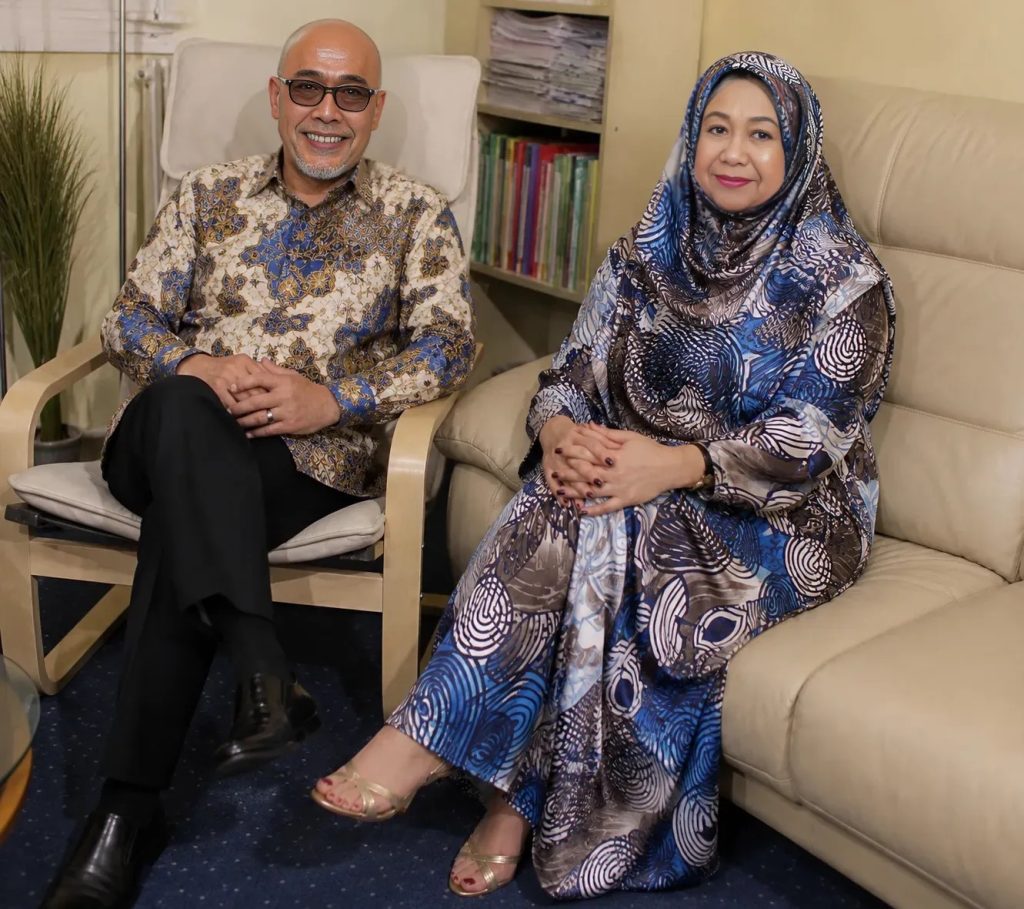
By
Yayasan Pendidikan Indonesia- Special Consultative Status in ECOSOC, United Nations (since 2013)
وَلَن تَرْضَىٰ عَنكَ ٱلْيَهُودُ وَلَا ٱلنَّصَـٰرَىٰ حَتَّىٰ تَتَّبِعَ مِلَّتَهُمْ ۗ قُلْ إِنَّ هُدَى ٱللَّهِ هُوَ ٱلْهُدَىٰ ۗ وَلَئِنِ ٱتَّبَعْتَ أَهْوَآءَهُم بَعْدَ ٱلَّذِى جَآءَكَ مِنَ ٱلْعِلْمِ ۙ مَا لَكَ مِنَ ٱللَّهِ مِن وَلِىٍّۢ وَلَا نَصِيرٍ
Abstract
This article examines the security dependence of the Gulf Cooperation Council (GCC) states on the United States, drawing on recent field data following the escalation of the US-Iran conflict in 2026. Through a qualitative approach and a review of accurate secondary sources, the study demonstrates that this dependence is not only unbeneficial but has effectively positioned the Gulf states as providers of strategic support for American interests. President Donald Trump’s demands for reimbursement have further highlighted the asymmetry of the relationship. Without a diversification of security strategies, the risk of renewed political destabilization—akin to a second Arab Spring—becomes increasingly tangible.
Introduction
The long-standing security dependence of the Gulf states on the United States has traditionally been viewed as a cornerstone of regional stability. However, developments on the ground following the 2026 escalation with Iran have proven otherwise. This dependence has not delivered significant net benefits to the GCC; instead, it raises an ironic question: “Who is protecting whom?”
Iran launched major attacks on US military bases in Bahrain, Saudi Arabia, Kuwait, the United Arab Emirates, and other locations, citing the presence of American forces as a direct threat. Field data indicate that these strikes caused substantial damage to military infrastructure, including facilities housing US troops. Initial estimates place damage to US bases in the region at approximately $5 billion. The host countries, meanwhile, bore direct economic losses through disruptions to energy exports, sharp increases in war-risk insurance premiums, and market capitalization declines amounting to tens or hundreds of billions of dollars.
If President Trump’s reimbursement demands fail to prompt reflection among Gulf leaders, the situation could be described as wujuduhu ka‘adamihi—a presence that is effectively without benefit, reminiscent of “a dead chicken in the rice barn.” This echoes Shakib Arslan’s response in the 1930s to an Indonesian scholar regarding the question limadha ta’akhkhara al-muslimun wa taqaddama ghayruhum (“Why have the Muslims lagged behind while others advanced?”), underscoring the illusory nature of American protection in the Gulf.
Field Data: The Costs of Dependence and the Reversal of Roles
Current operational data show that while US military bases in the Gulf provide Washington with critical access to protect its global interests—particularly the security of energy supplies, with around 30% of globally traded crude oil passing through the Strait of Hormuz—the host nations shoulder the hosting costs, retaliatory risks, and immediate economic losses.
Post-escalation reports from February–March 2026 indicate that GCC economies suffered losses exceeding $100 billion in the oil and gas sector alone due to disruptions in the Strait of Hormuz, along with approximately $20 billion per year in damage to Qatar’s LNG infrastructure. Financial markets in Dubai and Abu Dhabi lost around $120 billion in capitalization, while war-risk insurance costs rose sharply ($5–15 per barrel). Iranian strikes on energy facilities and bases further compounded these challenges.
In contrast, the United States has gained significant strategic advantages. Bases in the Gulf enable power projection, support CENTCOM operations, and help safeguard energy interests that benefit not only allies but also global markets—and, indirectly, the US economy.
President Trump’s demands that the GCC pay for this “protection”—including proposals for transit fees—openly acknowledge that Washington views the relationship as one requiring payment from the “protected” parties. Yet field data suggest the reverse: the GCC provides vital operational platforms for American strategic interests.
Historical studies confirm that maintaining US bases abroad costs Washington tens to hundreds of billions of dollars annually, yet host nations like those in the GCC also supply logistics, infrastructure, and often indirect financial contributions. Growing reluctance among GCC states toward this dependence is evident in past diplomatic diversification efforts, including dialogue with Iran and strengthened intra-GCC cooperation, although current escalatory pressures have constrained these options.
Risks of Destabilization and a Second Arab Spring
From a human security perspective, this dependence creates dual vulnerabilities. Attacks on US bases in the Gulf not only damage military infrastructure but also generate spillover effects on civilian sectors, including tourism, aviation, and investor confidence. A prolonged conflict could combine massive economic losses, perceived leadership failures in safeguarding sovereignty, and mounting social pressures, potentially triggering a new wave of political instability.
Comparative analysis with the 2011 Arab Spring highlights that key triggers were economic discontent and questions of governmental legitimacy—conditions that could recur on an even larger scale (an “Arab Spring 2.0”) absent a paradigm shift in security policy.
Conclusion and Recommendations
Field data and in-depth 2026 analysis clearly demonstrate that the GCC states’ security dependence on the United States is highly asymmetrical and counterproductive. Rather than receiving commensurate protection, the Gulf countries have become key providers of operational bases for American strategic interests, while absorbing retaliatory risks, economic losses in the hundreds of billions of dollars, and long-term threats of political destabilization.
What was once seen as an American “security umbrella” has become a source of new vulnerabilities. President Trump’s reimbursement demands only reinforce this role reversal: it is not America protecting the Gulf, but the Gulf effectively financing and sustaining American power projection in the region.
For Indonesia—the world’s largest Muslim-majority nation and a key member of the Organisation of Islamic Cooperation (OIC)—the lessons from the Arab world’s excessive dependence on the United States merit careful consideration. The concerning geopolitical events in the Gulf in 2026 serve as a valuable mirror: over-reliance on a single superpower can compromise sovereignty, economic stability, and national futures. Indonesia should draw wisdom from this experience to strengthen its position as a leading and natural leader within the OIC.
Indonesia has a golden opportunity to serve as a model of strategic self-reliance, active diplomacy, and balanced foreign relations. As the country with the largest Muslim population, the strongest economy among OIC members, and a proven tradition of independent and active foreign policy, Indonesia can act as a credible bridge for dialogue and mediation in the Muslim world.
In particular, Indonesia should set an example for other OIC nations by building strategic partnerships with Iran. Rather than following externally promoted narratives of suspicion and confrontation, Indonesia can demonstrate a more mature approach: engaging Iran as a mutually beneficial partner in economics, energy, technology, and inter-civilizational dialogue. With its ancient civilization, abundant natural resources, and significant regional influence, Iran can be an important partner for the OIC in achieving collective self-reliance. Such cooperation does not imply hostility toward others but rather the construction of balanced multi-partnerships for shared benefit.
In this way, Indonesia can avoid the trap of dependence experienced by the Gulf states while inspiring other OIC countries to embrace independent stances. This would reinforce Indonesia’s role as a visionary, just, and peace-oriented leader of the Muslim world focused on shared development.
Concrete Recommendations for Indonesia and the OIC:
1. Accelerate the diversification of security and economic partnerships, including strengthening intra-OIC cooperation in defense, technology, and food-energy resilience.
2. Promote the establishment of permanent OIC-level dialogue and mediation mechanisms to ease tensions in the Middle East, including between Iran and the Gulf states.
3. Increase joint investment and intra-OIC trade to gradually reduce dependence on external powers.
4. Play an active role in the management of strategic trade routes such as the Strait of Hormuz and the Strait of Malacca, guided by principles of neutrality and shared sovereignty.
Without concrete steps toward strategic self-reliance, the illusion of protection by foreign powers will continue to threaten long-term stability—not only for the Gulf states but for the entire Muslim world. For Indonesia, self-reliance is no longer merely an option but an existential imperative and a historic opportunity to lead the OIC toward a new era of greater sovereignty, prosperity, and dignity.
References
(Data drawn from CRS reports, Atlantic Council, Al Jazeera, Reuters, and other verified sources as of July 2026.)
This article is presented as a scholarly contribution to policy discussions in international forums, including the UN’s ECOSOC.